
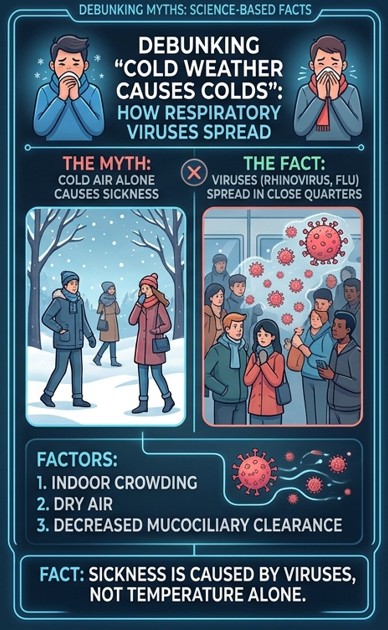
The cautionary advice “Put on a coat or you’ll catch a cold!” has been echoed by parents for generations. The idea that low ambient temperatures directly make you sick is a classic case of confusing correlation with causation. Colds and the flu peak in the winter, but cold air itself does not cause respiratory infections. Sickness is caused exclusively by microscopic viruses (like Rhinoviruses or Influenza).
The surge in winter illness is primarily a result of behavioral and environmental changes that favor these pathogens. When temperatures drop, people are driven indoors, where we congregate in poorly ventilated spaces. This creates a perfect environment for airborne respiratory droplets, which contain viral particles from a sneeze or a cough, to travel easily from person to person.
Environmental Variables that Matter:
Beyond human behavior, two crucial environmental factors amplify transmission in winter, both unrelated to the sensation of being “chilled”:
Low Humidity:
Cold air holds far less moisture than warm air. When we heat this cold air indoors, the humidity drops dramatically. Research has shown that in low-humidity environments, infectious respiratory droplets can dry out quickly and remain suspended in the air for longer periods, rather than absorbing moisture, becoming heavy, and falling harmlessly to the ground. Low humidity makes viruses more mobile.
Decreased Nasal Clearance:
When you do spend time in dry, cold air, the mucus-covered cilia (tiny hairs) that line your nasal passages and normally move pathogens out of your body are less efficient. The mucus layer can become thickened and dry, slowing this vital first-line defense.
The Role of Temperature on Immuno-Function:
There is a modest secondary mechanism where extreme, prolonged cold exposure (leading to mild hypothermia) may slightly suppress certain aspects of the immune response. However, this is not a general “immune crash,” and it is only a minor contributing factor compared to the massive increase in transmission risk caused by indoor crowding and airborne virus mobility in dry air.
In summary, the cold temperature doesn’t directly give you a cold; rather, the environmental and behavioral conditions associated with winter create the perfect storm for a virus to infect you.